Too Much Subtraction and Division in My Life. Looking for People to ADD and MULTIPLY!

Black lives should be valued equally.  Black lives deserve justice.  Yes – Black lives MATTER!

I was a Math teacher for 11 years. I know a tough equation when I see one.  No, this one is quite simple. We should all be able to agree on the correct answer.  And yet, the math seems to be very difficult for us right now.  Some want practice subtraction and division and frame it as a political issue. I’ve had enough of that.  It’s time for us to work more on our addition and multiplication. In order to do this, we have to see it as a human issue.

I’m looking for people that will add and multiply in my life.

A week ago Wednesday, the Milwaukee Bucks became a multiplier. They decided at the last moment that they just couldn’t take the court for their playoff game with the Orlando Magic.  They put out a statement to tell us why. 

“Over the last few days in our home state of Wisconsin, we’ve seen the horrendous video of Jacob Blake being shot in the back seven times by a police officer in Kenosha, and the additional shooting of protestors. Despite the overwhelming plea for change, there has been no action, so our focus today cannot be on basketball.”

It was a shocking moment that transcended the sports world.  Within minutes, other NBA teams said they didn’t feel they could take the court either. Then we heard from WNBA players.  MLS soccer games were postponed. Major League Baseball games were postponed. Tennis player, Naomi Osaka, said she wouldn’t play her semi-final match the next day.

The Milwaukee Bucks, whether they knew it or not, were practicing addition and multiplication.  Their words and actions lit a fire and created positive, unifying energy.  For me personally, they shook me.  It was a sudden jolt.  It was a reminder that people are hurting and I need to continue to pay attention to it.

As I wrote earlier, I was a Math teacher for 11 years. It’s very clear to me that we’ve spent too much time on subtraction and division. It’s separating us and preventing us from solving problems and helping each other.  It’s also literally killing us.

In the course of the last few years, I’ve learned about some new tools that do the same thing as subtracting and dividing: 

Embellishing.

Lying.

Deflecting.

Politicizing.

Weaponizing.

Taking Out of Context

Many of our leaders use these tools all the time.  What they are really doing is dividing us.  They are hoping to frustrate us.  They want us to become so exasperated that we stop caring.  They are counting on us to give up because we feel we can’t make a difference.

Van Jones is the CEO of the REFORM Alliance for Criminal Justice reform and a CNN Analyst. Van is another person that adds and multiplies. He talks and listens to people from all walks of life.

He recently summarized the current state of affairs in the U.S. as such:

There are 3 sources of Civil Unrest and Violence in our nation right now:

  1. Police violence against black people and people of color
  2. Rioters and looters at otherwise peaceful protests
  3. Vigilante groups coming to cause trouble

All 3 of these sources must be named and stopped.

This is the truth.  And it is the unifying message that would add and multiply.  It’s that simple. 

And yet many of our leaders use division on us. They only talk about some of these sources.  They minimize the importance of the first one.  Some even deny its existence.

I support the police and law enforcement. But we have to work to find a new way of doing things. 

Bob Bradley is the Head Coach of LAFC, an MLS soccer team based in Los Angeles.  Bob used to be the coach of the US National Team.  He has coached in Norway, England and was the coach of the Egyptian National Team during civil unrest there.  Bob is another multiplier.  He said it best last week:

“We need a real discussion about policing. That is real simple So the ‘we’ in this case is all of us who … see these videos, we see these incredible murders, sad, sad families over and over and over, and we can’t let the rhetoric and the misinformation and the lies get in the way of what we need to do. We can’t be against each other. We’ve got to find a way to change that. … We need to find the right way to speak respectfully to police, who have a hard job, to work with police for new ways of policing, de-escalation. We’ve got to make sure that now we are winning this moment, all right?”

“Black Lives Matter is simple: For too long in this country, black lives didn’t matter. And so enough of us must make sure that we’re together in that belief. And whether you wear the [Black Lives Matter] T-shirt, whether you stand for the national anthem, whether you kneel for the national anthem, those aren’t the important issues. The important issue is we believe there must be changes, and now it’s more than just a gesture. It’s finding real ways”

“I believe that there’s enough people in the right side of all of this, but man oh man, if we let the words and the lies divide us, then they’re winning, then we’re losing, then we’re not smart, then we’re not good enough.”

“Come on, there’s enough people in our country, I’m optimistic. I believe there’s enough people in our country that look at some of these incidents … incidents we must agree is wrong. And then we must work with the police to find a way it doesn’t happen again.”

“When I speak to the players, we talk about what’s going on and how we must find a way to stand together. I really want the players to understand and think for themselves. I don’t want them to feel that they are going to be viewed one way or another by whether they put a T-shirt on or whether they stand or kneel. What I want them to understand is that we must all fundamentally see what’s going on that’s wrong, and we must as a team stand for change, we must as a club find a real way to not just put out a statement, but be involved in communities to find ways so that we are really, truly doing something that matters.”

Doc Rivers is the coach of the L.A. Clippers.  He was definitely a multiplier last week. His impassioned statement at his post-game press conference hit home:

“The training has to change in the police force. The unions have to be taken down in the police force. My dad was a cop.  I believe in good cops. We’re not trying to defund the police and take all their money away.  We’re trying to get them to protect us., just like they protect everybody else.. you don’t need to be black to be outraged. You need to be American and outraged…All were asking is you live up to the Constitution. That’s all we’re asking.  For everybody. For everyone”

I am grateful for the Milwaukee Bucks, Van Jones, Bob Bradley, Doc Rivers and others who made a difference last week.  They added and multiplied.  I’m going to keep looking for more like them.  And try to be one myself. 

WATCH Doc Rivers Heartfelt Words:
The Game Taught Me We All Can Play…

Soccer is the world’s game.  Taking up the game allowed me to learn about the world.  Playing the game allowed me to interact with people from different places and communicate with people from different backgrounds.  Coaching the game allowed me to travel and experience the world.

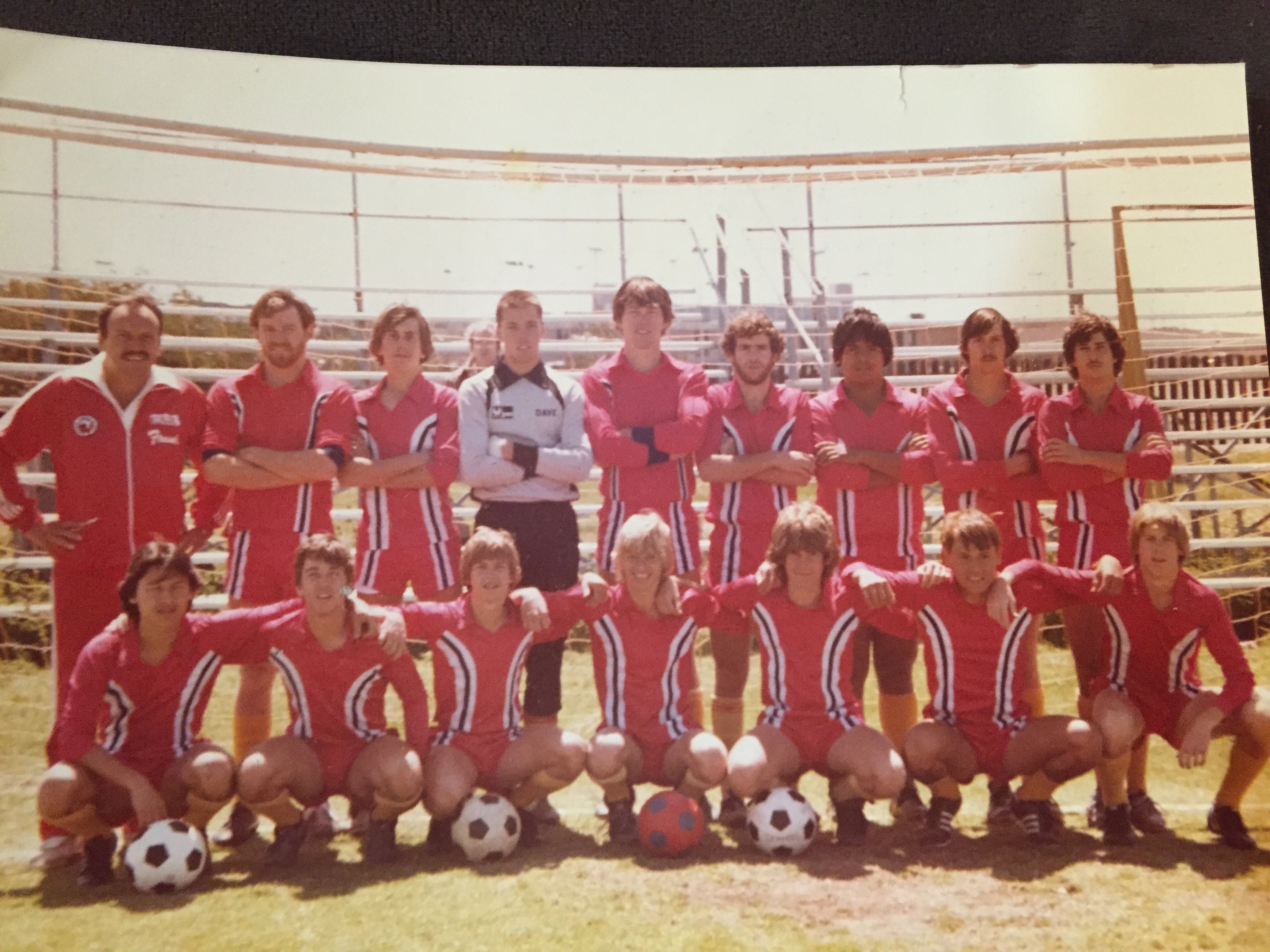
When I first started playing soccer in Los Angeles, I had teammates from all over…England, Germany, Colombia, Mexico, Cuba, El Salvador, Ireland, Canada, and more.  My coaches were from places such as England, Ireland, Puerto Rico, Croatia, and Italy. We got along.  We worked well together.  We had great times enjoying the game.

IMG_3464
My Buddies and I were from all over and learned equality through the game


One of the first lessons I learned in this environment is that everyone can play.  You can be any size, any shape, any gender,  any social status, any religion, any orientation, and -yes- any color.  It doesn’t matter.  If you can work hard, move the ball, compete and be a good teammate, then you can excel.

Growing up American and living in the U.S.A., I was taught that our society worked that way as well. If you worked hard, followed the rules, and were a good neighbor, then you would be given that same chance to excel.

The murder of George Floyd last week in Minnesota and other recent events have shown once again that this is not the case for everyone.  This is a painful and heartbreaking reality.  The protests on the TV and here on the streets of Salt Lake City say the same thing, “this is not fair and equal.” This is not what I learned in the game of soccer.  And it is not what I learned growing up in the U.S.A.

I have the following quote on my desk:

“It’s the action, not the fruit of the action, that’s important. You have to do the right thing. It may not be in your power, may not be in your time, that there’ll be any fruit. But that doesn’t mean you stop doing the right thing. You may never know what results come from your action. But if you do nothing, there will be no result.”

Mahatma Gandhi

I try to live by that.

Today is one of the most important times to step up and do the right thing.  I’m going to listen, talk and act. I’ve got a lot of friends that can help.  They feel the same way because soccer taught us that.

The Summertime Blues of College Soccer

“Sometimes I wonder what I’m a gonna do, but there ain’t no cure for the summertime blues.” – Eddie Cochran – “Summertime Blues”

On April 22nd, our team gathered together for the last time and talked about being safe, staying connected and working hard. And that’s when the sadness and worry kicked in!

May, June and July are such a bummer.  I hate not being around our Utah Women’s Soccer team for that long. And all I do is worry!

We had a fantastic Spring semester, one of the best I can remember. The players worked hard to get better. We played some very good teams to test ourselves. We got a few players back on the field after serious injury.  We learned a lot about our team. We were starting to find our stride as a group. And, just like that, it was over. We were done for 3 months.

We gave the players some ideas about what kind of training to do. And warned them that, in order to reach our lofty goals, they would have to come back on August 6th fit and sharp. Then it was good luck on finals and good bye!

IMG_8934

Performance Coach, Cody Lockling, with some hints for the summer on our last day of Spring training.

We Need More Time

Why do I get so worried? For the next 97 days our players will be on their own. Our team’s success will in large part depend on its ability to function without structure…and without the coaches.

When we get back together on August 6th, we will have only 16 days to prepare for our first game. This is NOT ENOUGH TIME. It is not enough time to get a team ready.  More importantly, it is not enough time for players to prepare safely and reduce their risk of injury. 

Women’s soccer has a high injury rate, one of the highest of all college sports. Among women’s sports, soccer has the highest for injury rate for ankles, 2nd highest injury rate for ACL, highest for injury rate during games, and 2nd highest injury rate during practices (behind gymnastics).

The best solution to these problems is TIME. Players need enough training time for a gradual increase in their workload. This is the most important factor in preparing for a healthy, successful season. The bottom line is the 16 days allotted for preseason training prior to our first game is not enough time.

What Happens in the Summer?

IMG_3209

Tom Iriye works with our players to keep them healthy all year long, including in the summer.

The NCAA rules regarding summer workouts are pretty simple.  Players may not have any training or help from coaches.  They may workout without a ball on a voluntary basis with a performance or strength coach.  And they may be treated by an athletic trainer. We are fortunate at the University of Utah to have a great support system. Some of the resources available to our players are incredible.  They include:

  • An athletic trainer, Tom Iriye, that is around during the summer and makes time for our them.
  • A performance coach, Cody Lockling, that is around during the summer and creates and executes plans for them whether they are around or away from campus
  • Summer school scholarship money and tutoring to continue their studies
  • Internship, volunteer hours and summer jobs in their field of study

Many of our players love to be here in the summer and take advantage of these resources.  They can get a lot accomplished on and off the field.

However, there are some important things we cannot do in the summer to help our players prepare. We cannot help them with soccer skills and training. We cannot go over video or other forms of learning. We cannot force them to run, lift, train or get treatment.  Heck, we can’t even know who is working out and what they are doing. Everything must be on a voluntary basis.

So, even though many of our players are here and want the help…even though they want to get better…even they want to have a healthy season…we can’t help them. Nothing until August 6th…and by then it is too little and, sometimes, too late.

Welcome to College. Now Find a Place to Live.

Our incoming freshmen also love to take advantage of our Summer resources. They can come to campus and start some classes.  They can get to know their teammates and the support staff. They can take advantage of these resources.  And they can try to get ready for their first college soccer season. They need this extra preparation time even more than the returning players as they will be putting their bodies and minds through a new kind of grinding season.

One huge question we get from incoming players and families is, “where do I live in the Summer”? Most of them live in the dorms during the academic year. And they could live in the dorms during the Summer for the 1-2 months they are in town.  However, the dorms are expensive. They can get a place off campus for much less money.

Soccer is an “equivalency” sport, meaning we can give partial scholarships.  With a roster of 25 or more players and 14 scholarships, the money gets spread out.  Most of our players get little room and board money.  So saving money is important to them.

NCAA rules prevent me from helping players find a place to live (with the exception of the on-campus housing). So I have this absurd conversation every year with the families of our new players:

ME: “Hey, come in the Summer and take advantage of Summer school, workouts and getting ready for the season with your new teammates.”

FAMILY: “That sounds fantastic!  So, I’ll be able to work with you on my game?”

ME: “Uh, no.  We can’t do that, but you can run and lift!”

FAMILY: “Well, um, okay.  Where can we live?”

ME: “Well I can set you up on-campus, but it’s more expensive.  Or you can find a place off-campus.”

FAMILY: “Okay. Dorms sound expensive. We prefer off-campus. But you’ll help us find a place in this new city, right?”

ME: “Well, I’m not allowed to do that. You’ll have to find a place and then figure out how she will get to campus each day.”

FAMILY: “SOLD!”

It’s a crazy way to welcome someone to your campus and program. And it’s maddening for family sending their child away from home for the first time.  It’s not comforting. It’s not right and it needs to change.

A Ray Of Hope From The Sun Belt Conference?

IMG_8810

No Ball Allowed! Current rules restrict supervised summer workouts to running and strength work!

“Well, I called my Congressman and he said, quote, ‘I’d like to help you son, but you’re too young to vote.'” – “Summertime Blues”

The Sun Belt Conference put forth an NCAA Proposal (2018-57) this year which offered some common sense and a ray of hope. It allowed 4 weeks of training prior to the beginning of preseason. It would allow 8 hours of training each week. And 4 hours each week could be on the field training with a soccer ball! And players and coaches could work together! WOW!  The proposal applied to soccer and volleyball programs. Two sports that start early and need preparation TIME.

Some simple math:

4 weeks of 8 hours + 16 days of preseason training camp = 6 weeks of prep

Now that is a proper amount of time to allow a gradual increased workload. That is enough time to produce:

  • Better soccer
  • Healthier players
  • Safer environment

Unfortunately, this common-sense solution was tabled.  There was some confusion about what was in the proposal.  It will be looked at again next year.

We NCAA Women’s Soccer folks have some challenges with new proposals.  We are a younger sport compared with basketball and volleyball.  We don’t have as many people at the administrative level (at our schools, at the conference level and at NCAA) that have played or understand our sport. And we have a hard time getting things passed to move our sport forward.

In this case, there is some reluctance to add weeks to our summer calendar for 2 major reasons:

  1. Summer training may add some expenses to athletic department budgets
  2. Asking athletes to give up some of their summer is a concern for administrators

However, these extra weeks…this extra TIME is critical to the health, safety and success of our players. And the time has come to get rid of our SUMMERTIME BLUES.  Here’s hoping next summer brings positive change. Until then, I’ll worry and sing with Eddie Cochran.


Prepare Yourself for College Soccer – Summer Training

College soccer is challenging. 

One of the hardest parts is to prepare yourself.

In college, soccer is a Fall Sport.  Practices, even games, start before school begins.  In most years, official practices start right around August 1st.  You get about 17 days before the first game.  That is NOT a lot of time.  Realistically, you need about 8 weeks of steady work to get your body ready for the season.

What does that mean?  Summer training.

The NCAA has some tough rules.   In the summer, coaches are NOT allowed to work with athletes.  No coaching.  No training.  Not even monitoring what the players are doing.  You must be willing to work on your own.

The NCAA DOES allow for Conditioning Coaches and Athletic Trainers to help players work out and to keep them healthy.


Cody Lockling is our Performance Coach.  He puts together the workouts.  He personalizes the programs for each player based on their specific goals and needs.

Coach STAN 9.25.15 (3)

Tom Iriye is our Athletic Trainer.  He is here all summer to help the players get fit and healthy as they prepare.


However, at the end of the day, it is up the the team and each player to prepare – to do the work – and get ready to play.  What does a summer program look like?…well, it’s important to work on the things you need to play your best:

  • Warm-Up and Cool-Downs
  • Technical Work
  • Agilities and Balance
  • Fitness
  • Strength-Work and Injury Prevention

Click the link below to download and see a 12-week program put together by Cody and Tom to prepare our new players.


2017 Incoming Summer Workouts

IMG_4633

Draw A Line – One Simple Act Can Help Introduce and Teach Great Defense

Jerry had a simple rule: “Don’t go into the 18-yard box unless the ball goes in there.”

I didn’t think it was a big deal at the time.  But it has become a staple of my coaching, forming the basis of our defensive principles and a daily reminder to keep it simple!

I had the privilege to coach under the legendary Jerry Smith at Santa Clara University from 1998-2001.  I had graduated from SCU a decade earlier and it was great to come back and be part of a fantastic coaching team.  Jerry, Eric Yamamoto and Brandi Chastain were great colleagues.  We got to work with some great players as well.

Wow, I learned a lot from Jerry and the team. We had some great teams.  We scored goals in bunches.  We were an early proponent of the 4-3-3 system, now commonplace.  However, many of the lasting principles were defensive ones.  And the simplest one comes first…DRAW A LINE!


Why hold the defense at the 18-yard box?

 While we are defending, there comes a point where we have to stop backing up.  For obvious reasons, it’s not a good idea to retreat into the goal.  At some point, we have to stand our ground and draw a line…tackle, block, dispossess and disrupt the attacking team.

screen-shot-2017-02-21-at-11-33-13-pm


Why draw a line?

  • Be close enough to the ball to tackle the dribbler, block a shot and crowd the attack.
  • Create a line to try to get the attackers offside.
  • Make space for our goalkeeper to see clearly and make a play.


Why draw a line at the 18-yard box?

  • It’s a natural line – easy for players of all ages to see and use as a guide.
  • It allows us to crowd the attackers as they get into shooting range. Most of the time our goalkeepers can save a shot from 20-25 yards.  So, we make sure shots are contested from this range or taken from further out.
  • This seems to be the right amount of space between our defense and the goalkeeper. So, if a ball is played behind on a pass or dribble, our goalkeeper can get to it.


A Pair of Situations

 There are two basic situations that come up regularly.  The first is when the opponent is coming into your defensive third of the field.  Your defense is backing up as the attack heads to goal.  The principle, again, is to stay out of the 18-yard box unless the ball goes in there.  Often times, it looks like this:


The second situation is when the ball does go into the 18-yard box.  Clearly, at this point, we have to go in there to try to stop the attack.  Once we are in there, we defend fiercely as it is a dangerous moment.  If the ball goes back out (by a clearance, block or a backward pass from the attackers) then we must get back out of the 18-yard box with urgency.  We use Jerry’s words, “FIRE OUT“.

(NOTE:  In some cases, you don’t have enough time to get all the way out.  You can use the 6-yard box and penalty spot at 12 yards as guides in those instances.  There are exceptions and gray areas, but I want to focus on the best way to start the process here).

Often times, it looks like this:


 Draw a line in training.  EVERY DAY.

 There it is.  The concept is simple.  It’s important to train on it as much as possible.  No excuses because it’s easy to do.  Nearly, every time we play to goals (big goals or small goals), we draw a line representing the 18-yard box.  It doesn’t have to be actually 18 yards from the goal.  Put it at an appropriate place for that exercise  No matter what we are training on, holding that line is emphasized that day.

Be prepared to call offside.  If you are asking players to hold a line, you must reward them with one of the biggest benefits!  This is another part of defending that players need to practice and no better place then right in front of the goal to learn.

I watch many youth games each year.  And I see defending as a part of the game that most players could do better.  Many of our freshmen players come to Utah needing a lot of work in this area.

There are many parts of soccer to work on and, at times, team defending can get pushed to the back of the line when we don’t have enough time.  However, this is an easy way to get better and can be incorporated into MOST sessions.  Give it a shot and let me know how it goes. If it works, you can join me in thanking Jerry.